Darkroom Enlarger Starter Kits for Beginners UK — Everything in One Box
Getting into film photography means learning to print, and printing means mastering the enlarger. If you're just starting out, the thought of buying an enlarger, light source, easel, timer, chemicals, and trays separately can feel overwhelming. That's where starter kits come in — they're designed to save you money and get you printing within weeks rather than months of research. But are bundled kits actually worth it, or are you better off sourcing bits individually?
What You Actually Get in a Starter Kit
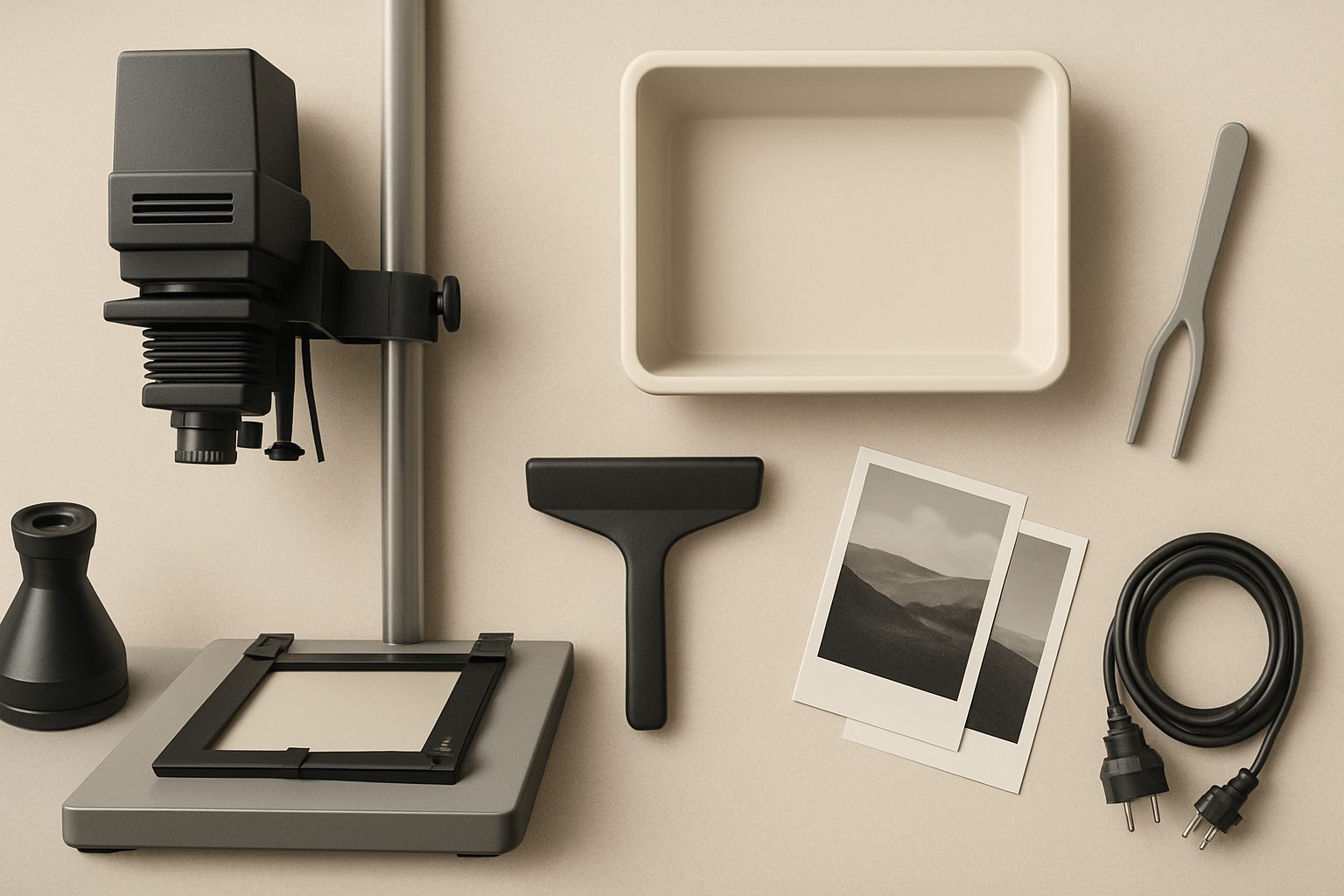
A typical darkroom enlarger starter kit UK suppliers offer includes three core elements: the enlarger itself, basic accessories, and a chemical starter pack. The enlarger is almost always a 35mm (small-format) model, since this is what most hobby photographers work with. You'll find models like the Paterson Enlarger or Ilford Multigrade sets, which come with a lens already fitted, a light head (usually condenser type), and a baseboard.
The accessories bundle normally contains an easel (for holding and positioning your printing paper), a focus finder, and sometimes a negative carrier. The chemical pack gives you developer, stop bath, and fixer — the three essentials for processing prints. Some kits add a safelight or basic timer, though cheaper versions skip these.
The honest truth: you're not getting premium equipment. You're getting decent, functional gear that works. A Paterson kit enlarger won't match a used Leitz or DeVere, but it'll print sharp negatives from 35mm at reasonable prices. That matters when you're learning.
Bundled Kits vs Building Your Own
Bundled kits win on cost and convenience. Buying a Paterson or Ilford starter set costs roughly £150–250 depending on what's included. Sourcing each component separately — enlarger, lens, easel, focus finder, chemicals, safety light, timer — easily runs £250–400. You're looking at genuine savings of 30–40%, plus everything is compatible out of the box. No hunting through forums wondering if that lens will fit, or buying a timer only to discover your enlarger head doesn't have a socket for it.
The catch: bundled kits assume you'll accept their choices. Don't like the lens they've included? Too bad. Want a different easel? You've already paid for one. This matters less if you're genuinely new — you don't yet know what preferences you'll develop. But if you've used enlargers before or you know you want specific features, buying separately gives you control.
Building your own kit suits you if: you already have half the kit lying around, you know exactly what you want, or you're willing to wait for secondhand bargains (especially from eBay and photography forums). You'll spend more time sourcing, but potentially less money if you're patient.
A bundled kit suits you if: you want to start printing within a month, you have a tight budget, you're genuinely new to darkroom work, and you don't want to risk buying incompatible gear.
Essential Checklist: What You Actually Need Beyond the Kit
Even with a starter kit, you'll need to buy a few things separately. Don't assume the kit covers everything.
Chemical replenishment: Most kits include enough chemicals for 10–20 prints maximum. You'll need larger bottles to keep printing. Budget £20–30 for developer, stop, and fixer in usable quantities.
Printing paper: The kit definitely won't include this. Ilford Multigrade RC (resin-coated) paper is reliable and affordable — around £15 for 100 sheets of 5x7in at most UK suppliers. If you want fibre-based paper (it looks nicer, lasts longer), expect £25–40 per 100 sheets.
Trays: Most kits skip these or include cheap plastic ones. You need three — one for each chemical. Proper plastic darkroom trays cost £3–5 each. Don't use them for food afterward.
Ventilation or fume control: Darkroom chemicals smell harsh. A window you can open, or a basic extractor fan (£20–40), makes a real difference to comfort and safety.
Measuring jugs and thermometer: These are cheap (£5–10 combined) and vital for consistent results. Many kits skip them entirely.
Paterson vs Ilford Kits: Real Differences
Paterson kits tend toward the basic end — a solid, no-frills enlarger that does the job. They're reliable but minimalist. An Ilford set usually includes more accessories (better easel, focus finder included, sometimes a timer) for a bit more money.
Neither brand will make you a better printer on its own. The difference is whether you're starting with frustrations stripped away or learning to work around limitations. Ilford's slight generosity on accessories makes it easier for complete beginners. Paterson suits people who don't mind sorting out a few extras themselves.
Both enlargers use the same standard lenses, so if you later decide the included lens isn't sharp enough, you can upgrade it. That's a strength of these kits — you're not locked into substandard glass for life.
The Real Value: Speed Over Perfection
The strongest case for a starter kit is simple: it collapses the barrier between deciding to start and actually printing. The moment paralysis is real with darkroom work. You can spend months researching before buying anything, or you can spend £150–200, set up a kit in an afternoon, and learn what actually matters through printing.
You won't create gallery-quality prints with a beginner's kit. You'll create prints that teach you composition, tonal control, and the craft. In six months, when you know exactly what you want from your enlarger and you're printing regularly, you can upgrade individual components. That's a perfectly valid path, and it costs less overall than trying to buy "the right" gear first.
More options
- Darkroom Enlargers (various brands) (Amazon UK)
- Enlarger Lenses (El-Nikkor, Rodagon, Componon-S) (Amazon UK)
- Darkroom Timers & Exposure Meters (Amazon UK)
- Ilford Multigrade Darkroom Paper (Amazon UK)
- Darkroom Starter Kits & Accessories (trays, easels, chemicals) (Amazon UK)