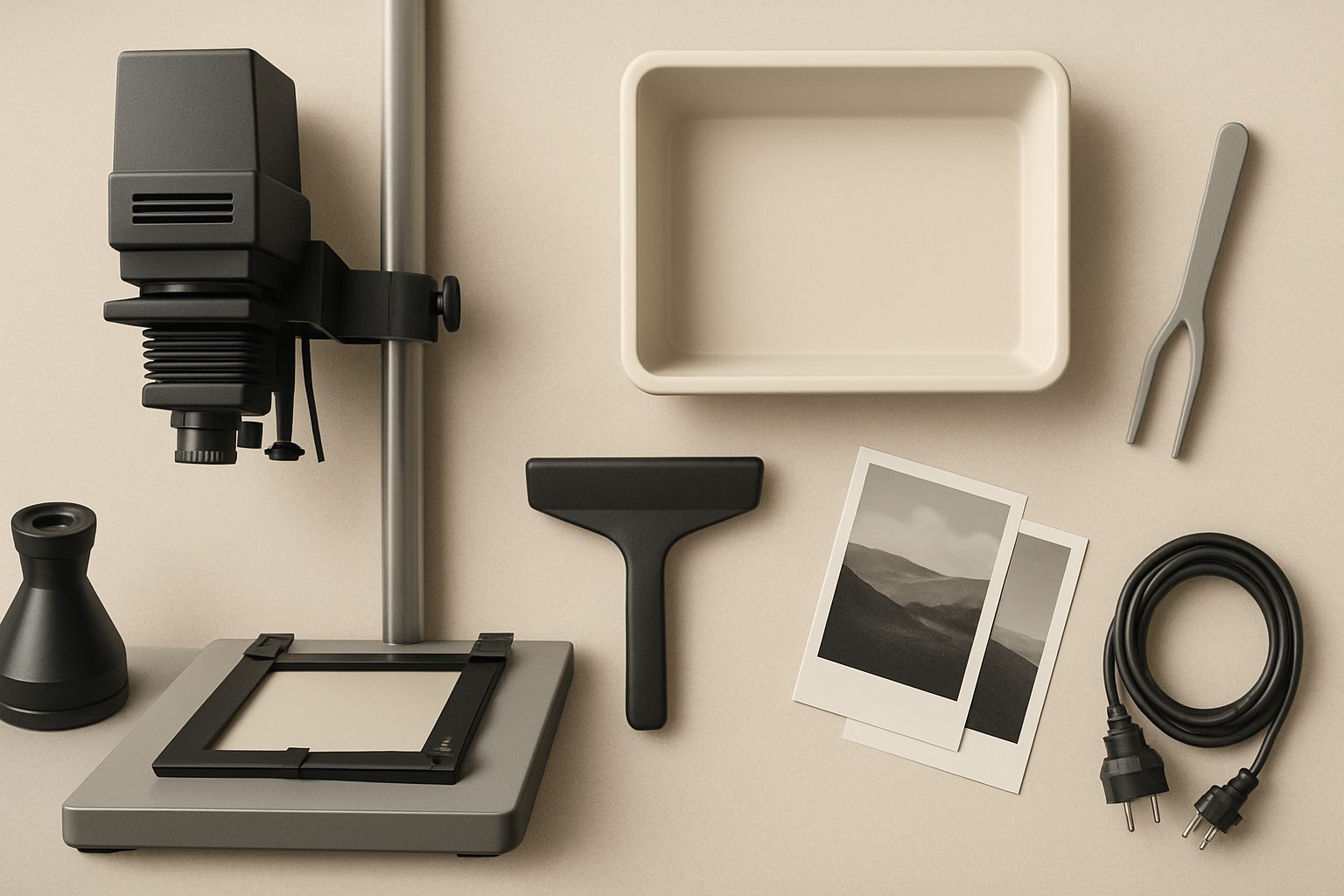
Complete Home Darkroom Setup Cost Guide UK — How Much Does It Really Cost?
Setting up a home darkroom needn't bankrupt you. Whether you're returning to film photography after years away or starting from scratch, you can build a functional space for anything from £300 to several thousand pounds depending on what you want to print and how you want to work. This guide breaks down real costs across four distinct budget tiers, with itemised gear lists that tell you exactly what you're getting at each level.
Budget Darkroom: £300–£500
This is the absolute minimum for printing 35mm negatives at modest sizes—typically up to 5×7 or 6×8 prints. You'll be working with entry-level gear and accepting some limitations, but it works.
What you get:
- Used enlarger (Durst M305 or similar budget model, often found on eBay or Gumtree): £80–150
- Essential chemicals (developer, stop bath, fixer for prints): £30–50
- Safelight (red or amber bulb + basic fixture): £15–25
- Printing paper (100 sheets, budget brand): £20–30
- Easel (basic metal frame): £15–25
- Trays (three plastic trays, 5×7 minimum): £15–20
- Thermometer and timer (basic digital): £15–20
- Grain focuser (optional but makes focus easier): £20–40
- Darkroom tape and lightproof materials (duct tape, black plastic): £20–30
Reality check: You'll need a blacked-out spare room, bathroom, or cupboard. The enlarger will likely need cleaning and testing. Prints will be small, and dodging and burning take practice. No enlarger timer means you're clicking a handheld stopwatch. This tier suits hobbyists experimenting with the craft.
Mid-Range Darkroom: £500–£1,000
Jump here if you're serious about printing 35mm negatives up to 10×12 or 8×10 regularly. You get better-quality gear, more control, and less frustration.
What you get:
- Used or budget new enlarger (Leitz Focomat V35, Omega D or equivalent): £200–350
- Colour head enlarger option for B&W (avoids filter-set hassle): adds £100–150
- Chemical kit with proper chemistry (Ilford, Kodak, or Agfa brands): £60–80
- Proper safelight with correct filtration: £25–40
- Printing paper (500 sheets, mid-range brand like Ilford): £50–80
- Adjustable easel with blades (Saunders or equivalent): £30–50
- Set of three or four proper darkroom trays: £40–60
- Thermometer with larger scale, timer: £20–30
- Grain focuser: £30–50
- Print tongs (to avoid chemical-stained hands): £10–15
- Dodging and burning tools: £15–25
- Storage shelving for chemistry and paper: £50–100
Reality check: You can produce exhibition-quality prints at home. The learning curve flattens—you're no longer fighting poor equipment. Most serious home printers stop here unless they want to work with larger formats.
Serious Hobbyist Setup: £1,000–£2,000
You're printing 8×10 negatives comfortably or experimenting with medium format (6×7 or 6×6). You own rather than scavenge, and your space is genuinely optimised.
What you get:
- Quality enlarger (Leitz Focomat V35 or newer Omega model, often new-old-stock): £400–600
- Lens upgrade (quality glass matters enormously—Schneider or Rodenstock): £150–250
- Timer with proper enlarger socket: £40–80
- Print washer (proper draining, not manual trays): £80–150
- Easel with accurate registration: £50–80
- Dedicated chemistry setup with storage containers: £80–120
- Bulk print paper (multiple grades and surfaces): £100–150
- Dodging and burning sets with hand-crafted tools: £30–60
- Proper darkroom ventilation or carbon filter unit: £150–300
- Light meter for precise exposure calculation: £30–80
- Loupe for checking negative sharpness: £20–50
- Darkroom shelving, drying rack, film hangers: £100–200
- Darkroom door seal kit and lightproofing materials: £50–100
Reality check: Your darkroom looks intentional. You're producing exhibition prints regularly. Medium format opens up options. Workflow is smooth, and you spend time on craft rather than fighting logistics.
Professional or Dedicated Space: £2,000+
Rare for home enthusiasts, but you see this with serious practitioners, those working with large format, or those printing for clients.
What you get:
- Professional-grade enlarger (Leitz V35 Autofocus, newer Saunders Omega, or 4×5 enlarger): £600–1,200
- Dedicated darkroom room build-out with proper ventilation: £500–1,500
- Masking system for large prints: £150–300
- Colour printing capability (adds chemistry and precision requirements): £300–600
- Professional print washer with temperature control: £200–400
- Film processing tanks and equipment: £100–200
- Archival chemistry and paper supplies: £200–400
- Everything from the £1,000–2,000 tier refined and duplicated
What Dictates Your Tier?
Print size: 35mm negs max out around 8×10 without visible grain. Medium format lets you go bigger comfortably. Large format (4×5) needs a different enlarger entirely.
Permanence expectations: Budget papers and chemistry work fine for personal prints. Archival-quality supplies (acid-free paper, selenium toning) add cost and complexity but ensure prints last decades.
Space: A bathroom works for budget darkrooms. Serious work needs a dedicated room with proper ventilation.
Frequency: If you're printing weekly, the £500–1,000 tier pays for itself in reduced frustration. If you're printing twice a year, £300 works fine.
Most UK home printers find their sweet spot around £800–1,200. You own decent kit, prints are consistent, and working in the darkroom becomes genuinely pleasurable rather than an exercise in compromise.
More options
- Darkroom Enlargers (various brands) (Amazon UK)
- Enlarger Lenses (El-Nikkor, Rodagon, Componon-S) (Amazon UK)
- Darkroom Timers & Exposure Meters (Amazon UK)
- Ilford Multigrade Darkroom Paper (Amazon UK)
- Darkroom Starter Kits & Accessories (trays, easels, chemicals) (Amazon UK)